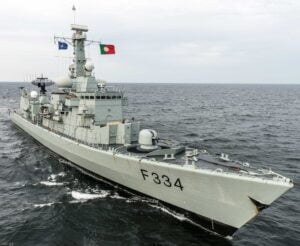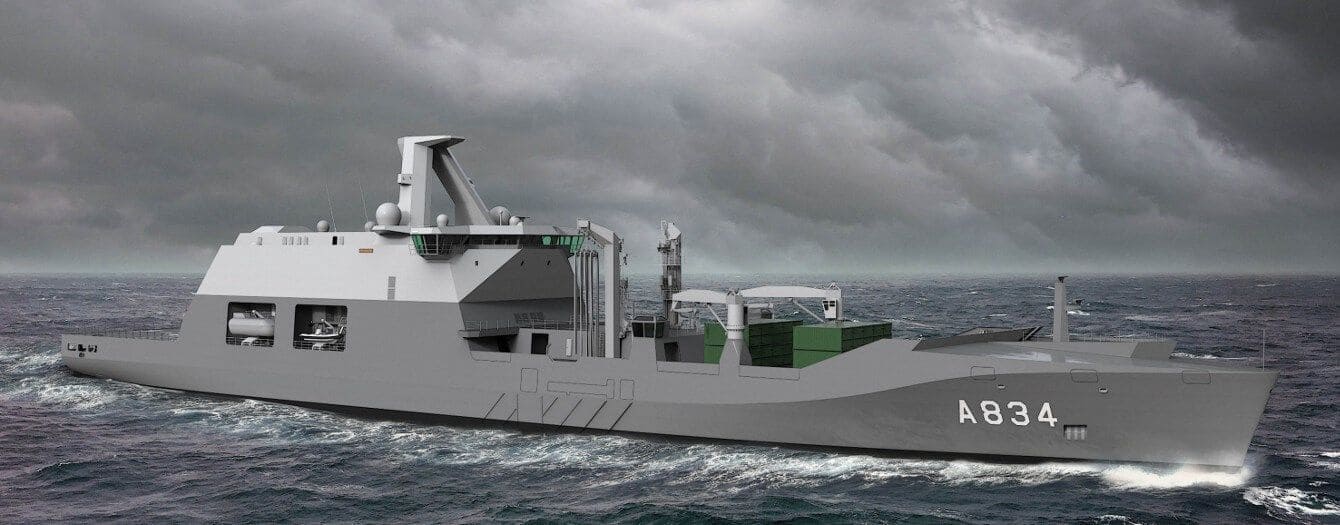

Mr. Marine Instruments & Controls has, a trusted partner in specialized maritime services, is proud to announce the successful contract award and execution of a highly detailed calibration and certification project for Damen Shipyard Vlissingen . The scope of work focused on ensuring the operational accuracy and regulatory compliance of a significant number of vital instruments onboard the Portuguese Navy Vessel Dom Francisco De Almeida. This critical project required the precise handling and certification of nearly all the vessel’s pressure monitoring equipment, involving the calibration and certification of most of the 65 pressure gauges spread across the highly complex naval ship.
While the phrase “calibrating 65 gauges” might sound straightforward at first glance, the execution of such a project within the stringent environment of a naval vessel, docked at a major shipyard like Damen Vlissingen, is far more complicated and demanding than one might initially think. It requires meticulous planning, expert coordination, and an uncompromising approach to quality control and documentation, reflecting the naval vessel’s mission-critical operations and unique construction.
Phase 1: Meticulous Identification and Disassembly Onboard
The initial phase of the project commenced with an essential step: identification and projection within a highly intricate navy ship environment. Unlike commercial vessels with standardized layouts, naval ships are characterized by densely packed systems, specialized compartments, and complex piping networks. Every single gauge needed to be accurately located, cross-referenced with ship schematics, and documented—a painstaking process designed to prevent errors during reinstallation.
Following successful identification, the second major step involved the professional disassembly of all the meters. This process demanded the utmost care and precision, as the gauges are often situated in hard-to-reach locations and integrated into pressurized systems. Crucially, every aspect of the removal had to be specifically noted, both administratively and on location. Administrative documentation included tagging, photographic evidence, recording location codes, system function, and the corresponding calibration due date. On-site notation ensured that the technicians understood the exact mounting orientation, connections, and any surrounding factors critical for correct reassembly. This dual-layer documentation system is a non-negotiable requirement for naval and high-stakes maritime projects, ensuring complete traceability and accountability for every single instrument removed.
Phase 2: Workshop Calibration and Bespoke Requirements
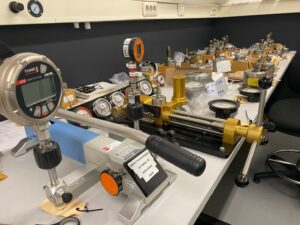
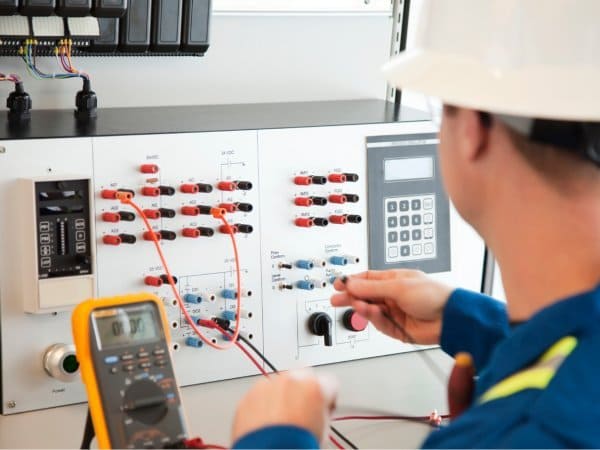
Once all meters were successfully identified, documented, and professionally disassembled, they were securely transported to the state-of-the-art calibration workshop in Alblasserdam. This centralized, climate-controlled facility provides the ideal environment for high-precision metrology work.
The first step upon arrival was a thorough visual inspection and verification of all meters. This process weeds out any gauges showing physical damage, corrosion, or signs of tampering that would compromise their ability to hold calibration. The team at Mr. Marine Instruments & Controls maintained open and constant communication with Damen Shipyard Vlissingen, ensuring that the yard was exactly informed of the inspection results. Furthermore, every detail was double-checked against the initial on-site documentation before the calibration process could begin, a necessary redundancy given the critical nature of the vessel.
The calibration itself was performed using traceable reference standards, adhering to international norms and the specific requirements of the Portuguese Navy. During this rigorous process, the meters were accurately categorized: approved meters were separated from the rejected ones.
The subsequent challenge involved the gauges that failed calibration. Replacement meters must be procured and installed for the rejected meters. However, in the case of a specialized military vessel like the Dom Francisco De Almeida, this is far from a simple trip to a parts warehouse. The special and challenging aspect is that each replacement gauge is tailor-made for this ship. Naval specifications often dictate unique face sizes, mounting configurations, pressure ranges, dial markings, and even specific materials to meet shock and vibration standards. Getting a meter from stock somewhere is simply not possible in this case. Mr. Marine’s project management team had to coordinate the expedited production or modification of custom replacement gauges, a process that requires specialist sourcing and often intricate in-house fabrication or modification to match the vessel’s exact, unique requirements, maintaining the critical project timeline.
Phase 3: Certification and Final Reassembly Onboard
Only after all meters were complete, calibrated, approved, and officially certified did the project move to its concluding phase. Certification involves issuing precise, traceable calibration certificates for every single gauge, confirming its accuracy against international standards—a vital document for the vessel’s regulatory dossier.
A final visit was scheduled to return to the Dom Francisco De Almeida at the shipyard. The reassembly phase demanded the same level of professionalism and meticulous care as the disassembly. Each of the 65+ meters—original and custom-made replacements—had to be correctly reinstalled in its exact, documented location, ensuring proper seating, connection, and sealing to prevent leaks or operational faults.
The successful completion of the installation culminated in a final inspection with the person in charge on board. This crucial sign-off confirmed that all meters were neatly and professionally installed where they belonged, and that everything was visually and operationally in order. This collaborative final inspection ensured that the client’s representative validated the quality of the installation, marking the successful handover of the calibrated vessel.
This project showcases Mr. Marine Instruments & Controls’ specialized capability to manage complex, large-scale instrumentation projects on highly customized vessels like naval ships. It underscores the company’s commitment to precision, complex logistics management, and the highest standards of regulatory compliance, delivering critical services that ensure the reliability and safety of vital ship systems.
Contact our team for additional information. Our technicians are available in 350+ global ports.