
Ballast water treatment has become one of the most scrutinized areas of maritime compliance. As port state control authorities tighten their inspections worldwide, shipowners and operators must understand what a failed BWTS inspection means in practice and how to respond effectively.
Why BWTS inspections matter
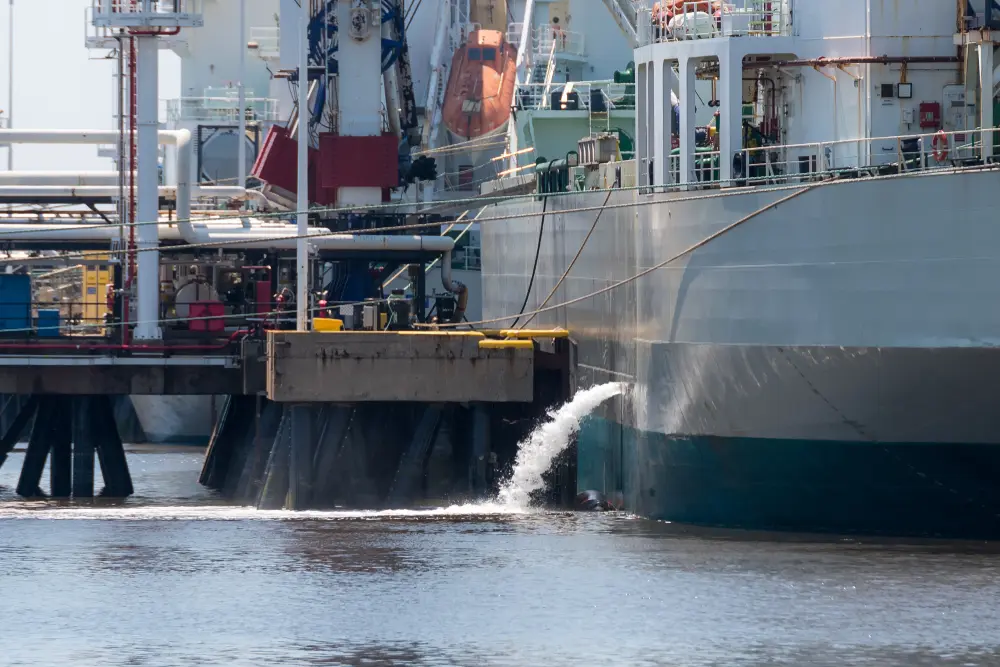
The Ballast Water Management Convention (BWM Convention), enforced by the International Maritime Organization (IMO), requires ships to treat their ballast water before discharge. The goal is to prevent the transfer of invasive aquatic species between regions, a problem that has caused serious environmental damage in many parts of the world.
To verify compliance, ships must carry a type-approved Ballast Water Treatment System (BWTS) that is properly installed, maintained, and operational. Port state control (PSC) officers inspect these systems during port calls. If something is wrong, the consequences can be immediate and costly.
Common reasons ships fail a BWTS inspection
Before discussing what happens after a failure, it helps to understand why failures occur. In most cases, they fall into a few recurring categories:
- Documentation deficiencies – Missing or incomplete Ballast Water Record Books, expired certificates, or an absent or outdated Ballast Water Management Plan.
- System malfunction – A BWTS that is not functioning correctly, showing error codes, or has been bypassed without authorization.
- Calibration issues – Sensors and UV intensity meters that are out of calibration and cannot verify that the system is treating water to the required standard. This is more common than operators expect, and it is why routine BWTS calibration is a critical part of fleet maintenance.
- Non-compliant discharge – Evidence or reasonable suspicion that untreated ballast water has been discharged in violation of the Convention.
- Crew unfamiliarity – Officers who cannot demonstrate knowledge of the BWTS procedures or explain the system’s operation during an inspection.
Immediate consequences of a failed inspection
When a port state control officer identifies a deficiency in the BWTS during an inspection, the response depends on the severity of the finding.
Minor deficiencies are typically noted in a deficiency report and the ship is given a deadline to rectify the issue. The vessel may be permitted to sail, but must demonstrate corrective action has been taken, either before departure or at the next port of call.
Major deficiencies are a different matter. If the PSC officer determines that the BWTS is non-functional, that unauthorized bypasses have occurred, or that there is a risk of non-compliant discharge, the ship may be detained.
Detention means the vessel cannot leave port until the deficiency is resolved to the satisfaction of the authority. This has direct financial consequences:
- Port stay costs accumulate by the day
- Cargo operations may be delayed or disrupted
- Charter party obligations may be breached, triggering penalty clauses
- The shipowner may face claims from cargo interests or charterers
Detention is also recorded in the PSC inspection databases (Paris MOU, Tokyo MOU, etc.) which are publicly accessible. A ship with a detention history might attract more frequent and more rigorous inspections at future port calls, compounding the operational burden over time.
Flag state notification and reporting
Depending on the port and the nature of the deficiency, the flag state may be formally notified of the inspection outcome. In cases involving suspected intentional non-compliance, such as the use of a magic pipe or deliberate bypass of the BWTS, the matter can escalate significantly beyond a simple deficiency report.
Investigations can be opened, and in serious cases, criminal proceedings are possible under the laws of the port state. Fines can reach into the millions of dollars. The reputational damage to the shipowner, operator, and management company can be long-lasting.
What to do after a BWTS inspection failure
The steps taken immediately after a failed inspection are critical. Acting quickly and systematically can limit the duration of a detention and demonstrate good faith to the inspecting authority.
Step 1: Identify the root cause. Work with the BWTS manufacturer’s representative or a qualified service engineer to determine exactly what caused the deficiency. Do not attempt to resolve the issue without proper technical support, as an improper repair could make the situation worse.
Step 2: Engage the classification society. If the deficiency affects the ship’s class status, the relevant surveyor should be notified without delay. They can assist in coordinating the inspection and any required surveys.
Step 3: Gather and organize documentation. Ensure that the Ballast Water Record Book is complete and accurate, the Ballast Water Management Plan is aboard and current, and all service records for the BWTS are available for review.
Step 4: Communicate with the PSC authority. Maintain clear and professional communication with the port state control officer. Present a concrete corrective action plan with realistic timelines.
Step 5: Conduct a thorough service or repair. Depending on the nature of the failure, this may involve replacing components, recalibrating sensors, or a full system service. For operators without an established service relationship, working with a specialist in BWTS repair and maintenance can significantly reduce downtime.
The role of preventive maintenance
Most BWTS inspection failures are preventable. Ships that maintain a consistent and well-documented maintenance schedule rarely face major deficiencies. The BWTS is not a set-and-forget system. UV lamps degrade over time. Filters require regular cleaning. Sensors need periodic calibration to remain accurate. These are scheduled tasks, not emergency responses.
Operators who treat the BWTS as a priority system, alongside propulsion, navigation, and safety equipment, are far less likely to face disruption during a port state control inspection.
Crew training is equally important. Officers responsible for ballast water operations should understand the system they are managing. They should know how to read the system’s status indicators, what to do if an alarm triggers, and how to document ballast water operations correctly. An inspector will often ask crew members directly about the system, and a confident, accurate response goes a long way.
Planning around inspection risk
Some ports and regions are known for stricter PSC enforcement than others. Operators calling at ports under the Paris MOU, Tokyo MOU, or the United States Coast Guard jurisdiction should be particularly prepared. The USCG, in particular, applies rigorous standards and has the authority to detain foreign vessels for BWTS non-compliance.
Before a port call in a high-scrutiny region, it is worth conducting an internal review:
- Is the BWTS operational and free of error codes?
- Are all certificates current and aboard?
- Is the Ballast Water Record Book fully up to date?
- Has the system been serviced and calibrated within the required intervals?
This kind of pre-arrival checklist takes little time and can prevent significant disruption.
Final thoughts
A failed BWTS inspection is not simply a paperwork problem. It can result in detention, financial penalties, damaged commercial relationships, and long-term reputational harm. The good news is that the vast majority of inspection failures are avoidable through disciplined maintenance, accurate record-keeping, and properly trained crew.
Shipowners and technical superintendents who invest in regular BWTS servicing, calibration, and crew familiarization are protecting far more than regulatory compliance; they are protecting the operational continuity of their vessels.
If your fleet requires support with BWTS calibration and certification, or inspection readiness, our team is available to assist. Contact us to discuss your requirements.
Mr. Marine provides specialized marine technical services to vessels and fleet operators worldwide. Our team supports shipowners with BWTS maintenance, calibration and compliance readiness across a wide range of system types and vessel classes.